
For many children, swimming lessons are exciting. They enjoy the water, the games, and the chance to learn something new. For others, the experience can feel very different. A busy pool, unfamiliar instructors, and a group of children learning together can feel overwhelming before the lesson has even begun.
This is where semi-private swimming lessons can offer a more supportive start.
By reducing class size and creating a calmer environment, semi-private lessons allow children to feel safe, understood, and gradually more confident in the water. Instead of focusing on speed or comparison, the experience becomes about helping each child feel comfortable enough to participate. For many families, this quieter beginning helps children build the confidence that makes long-term swimming progress possible.
Why Anxiety and Shyness Change How Children Learn to Swim
Not All Children Experience Swimming Lessons the Same Way
Children respond to new experiences in different ways. Some are eager to jump into the water straight away. Others prefer to observe quietly before joining in.
For anxious or shy children, a busy swimming class can feel overwhelming. Multiple instructors speaking at once, children splashing nearby, and unfamiliar routines can create sensory overload. In these moments, the child may not be focusing on learning to swim at all. Instead, they are trying to understand the loud environment around them.
Recognising these differences is important. Learning to swim is not just about physical skills. Emotional readiness plays a significant role in how comfortably children engage with the water.
Why Traditional Group Lessons Can Feel Overwhelming
Traditional group lessons often include several children learning at the same time. This format can work well for families, but it can also be challenging for children who need a calmer introduction.
Large classes often involve waiting turns, watching others attempt skills, and adjusting to a higher level of activity around the pool. For some children, this environment adds pressure rather than reassurance.
Progress Often Begins With Feeling Safe
Before children learn to kick, float, or coordinate breathing, they first need to feel comfortable in the water. When a child feels calm and supported, they are far more likely to try new movements and follow instructions. For anxious or shy swimmers, confidence often develops before visible swimming skills do.
What Makes Semi-Private Swimming Lessons Different?
Fewer Children, More Emotional Space
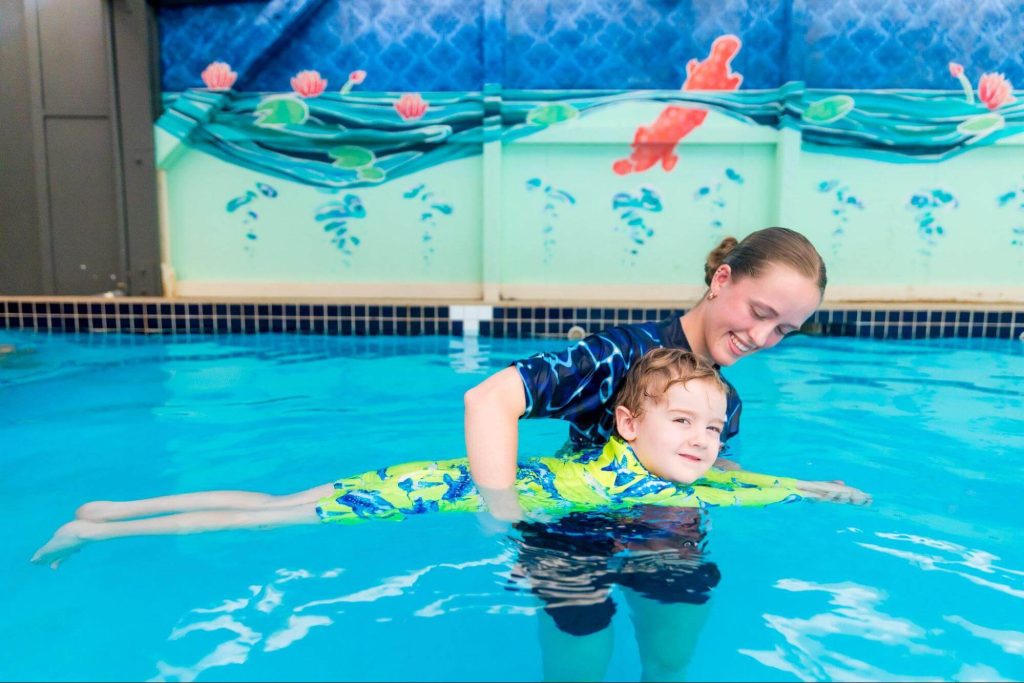
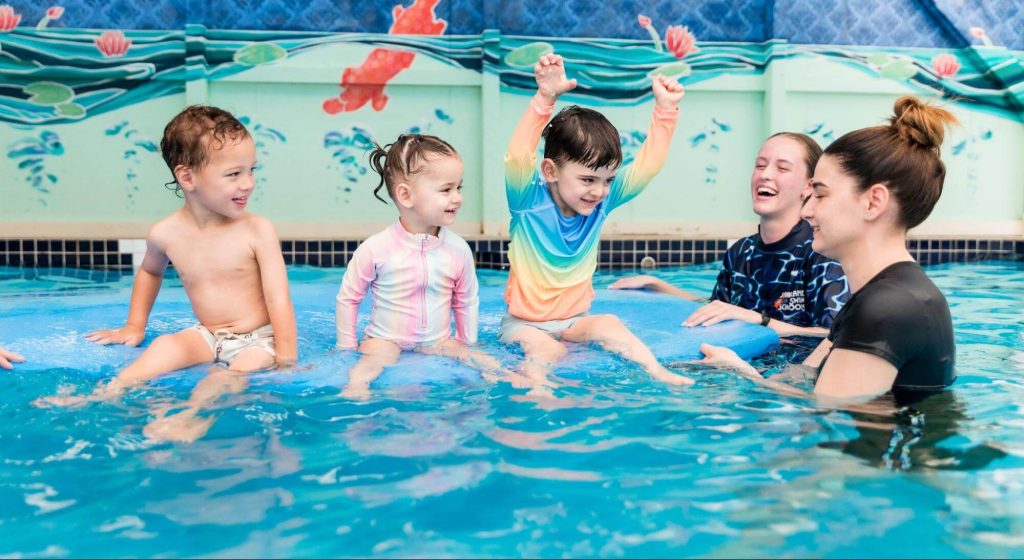
The most noticeable difference in semi-private swimming lessons is class size. Instead of learning alongside a large group, children typically share the lesson with one or two peers.
This smaller environment naturally reduces noise, distractions, and pressure. Instructors are able to spend more time observing each child and adjusting their guidance accordingly. For anxious children, the calmer setting often makes it easier to relax and participate.
One of the biggest advantages of semi-private swimming lessons is the quiet learning environment they create. With fewer children in the class, there is less noise and distraction, which helps children feel more settled and focused in the water.
It also means there is far less waiting around. In larger group lessons, children often spend time watching and waiting for their turn. In a semi-private class, they are more consistently moving and swimming, giving them more opportunities to practise and stay engaged throughout the lesson.
With only three students in a class at most, children are also able to connect and bond more naturally with their teacher. The extra interaction and one-on-one time helps build trust while allowing the teacher to better understand how each child learns and responds in the water.
Another important benefit is the reduced pressure to keep up with others. In a semi-private setting, each child can be working on something different at the same time. This allows them to progress at their own pace, without feeling rushed or left behind, creating a more positive and supportive learning experience.
Water safety organisations such as Royal Life Saving Australia highlight the importance of structured swimming education in helping children develop confidence and essential water skills over time.
Why Semi-Private Isn’t the Same as One-on-One
Parents sometimes assume that private lessons are the best solution for nervous swimmers. While one-on-one instruction can be helpful in some situations, it can also place all attention on a single child.
For some children, this can feel intimidating.
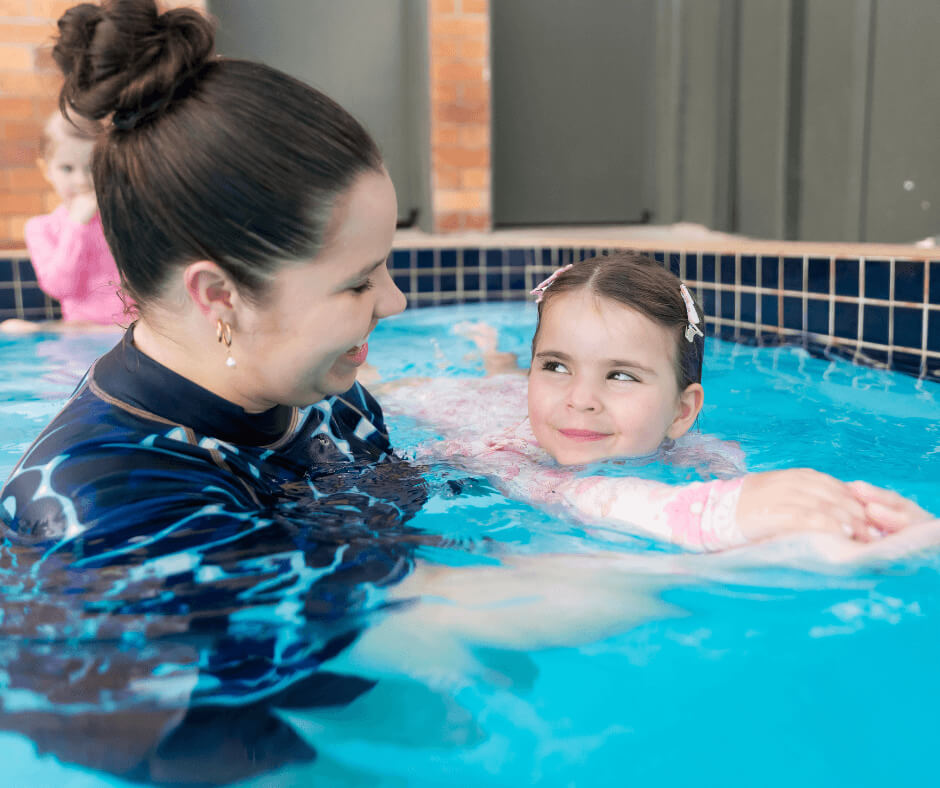
Semi-private lessons offer a balanced alternative. Children still receive individual support, but they also share the learning space with another child or two. This reduces the feeling of being watched while still allowing instructors to give meaningful attention.
How Gentle Peer Learning Builds Confidence
Learning alongside one or two peers can also create a gentle sense of encouragement. When children watch someone else attempt a skill, it often reduces uncertainty. They see that trying something new is safe and achievable.
Over time, this quiet form of peer learning can build confidence without pressure.
How Semi-Private Lessons Support Anxious or Shy Children
Consistent Instructors Build Trust Faster
For many children, familiarity is key to feeling comfortable in the water. Seeing the same instructor each week helps children build trust and predictability.
When children recognise the instructor and understand the lesson structure, their focus can shift away from uncertainty and towards learning.
Slower, Calmer Pacing Reduces Emotional Load
Semi-private lessons also allow instructors to adapt the pace of the lesson more naturally. In a large class, the instructor often needs to keep the group moving together. In a smaller setting, there is more flexibility.
Children can take the time they need to feel comfortable before attempting a skill. This often leads to steadier progress and fewer moments of resistance.
Instructor Observation: What Confidence Looks Like Before Skills
Parents sometimes expect progress to appear as new swimming techniques. In reality, the earliest signs of improvement are often emotional rather than physical.
An instructor might notice that a child enters the pool more willingly, stays engaged for longer, or begins attempting movements they previously avoided. These small changes are often the foundation of future swimming skills.
What Progress Really Looks Like for Anxious or Shy Children
Why Confidence Often Comes Before Technique
For confident children, skills and confidence can develop simultaneously. For more cautious swimmers, confidence often needs to come first.
Children who feel secure in the water are more willing to experiment with movement, follow instructions, and repeat new skills. As this comfort grows, physical technique tends to develop more naturally.
Research into child development and aquatic learning highlights the importance of confidence and supportive environments when introducing children to water. Studies on children’s swimming skill development show that factors such as social support and positive learning experiences can influence how comfortably children engage with swimming lessons.
Anecdote: A Child Who Needed Time
One Shapland instructor recalls a child who spent the first few lessons sitting quietly by the pool edge, simply watching the class. There was no pressure to rush the process.
Over time, the child gradually stepped into the water with support. Within several weeks, they were happily participating alongside the other children.
The turning point was not a particular skill. It was the moment the child realised the water felt safe.
Are Semi-Private Swimming Lessons Worth It?
Cost vs Value for Anxious Children
Parents often ask whether private lessons are worth the investment. In reality, the answer depends less on price and more on the child’s needs.
For children who feel overwhelmed in large groups, the value of semi-private lessons often comes from the learning environment itself. Smaller classes allow instructors to respond more carefully to each child’s comfort level and progress.
Why Price Comparisons Miss the Point
Questions about lesson costs are common. Parents often wonder how much private swimming lessons cost or what the hourly rate for an instructor might be.
While these comparisons are understandable, focusing only on price can overlook an important factor: the environment in which a child learns best. A child who feels overwhelmed in a large class may take longer to build confidence.
The Right Environment Often Leads to Better Progress
When children feel comfortable during lessons, they are more willing to participate and practise new skills. A supportive environment can reduce resistance and make each lesson more productive. Over time, this steady engagement often helps children progress more smoothly than if they were learning in a setting that feels overwhelming.
Common Questions Parents Ask (But Rarely Say Out Loud)
Is My Child Too Anxious for Lessons?
Many parents quietly wonder whether their child may not be ready for swimming lessons. Anxiety around water is actually quite common, particularly during the early stages.
Semi-private environments often help these children feel less overwhelmed and more willing to try.
Is It Normal to Need This Much Support?
Parents sometimes worry that needing extra support means their child is struggling. In reality, learning environments affect everyone differently.
Just as adults learn in different ways, children also respond differently to teaching styles and class sizes. Some thrive in energetic group settings, while others feel more comfortable building confidence in a smaller, calmer environment.
Parents who want to better understand how children build confidence in the water over time can also explore how to best support their baby in their learn-to-swim journey.
Where Semi-Private Lessons Fit Into Long-Term Swimming Confidence
Why Semi-Private Lessons Often Lead to Better Transitions
Semi-private lessons are not necessarily a permanent format. For many children, they act as a bridge between individual support and larger group environments.
Once children feel confident in the water, transitioning into standard classes often becomes much easier.
The 80/20 Rule in Swimming, Explained Simply
You may sometimes hear instructors refer to the 80/20 rule in swimming. In simple terms, it means that most progress often comes from a few core factors: feeling safe in the water, consistent practice, and positive learning experiences.
Technique certainly matters, but confidence and engagement often drive the majority of improvement.
What This Means for Families Right Now
Choosing the Right Lesson Format for Your Child
Every child approaches swimming differently. Some thrive in energetic group classes, while others benefit from smaller, quieter learning environments.
Understanding your child’s personality and comfort level can help guide this decision.
Why Semi-Private Lessons Are Often the Calmest Place to Start
For children who feel hesitant in new environments, semi-private swimming lessons can offer a supportive introduction. Smaller groups reduce pressure while still allowing children to learn alongside others.
This balance often creates a calm space where confidence can develop naturally.
Next Steps for Families Exploring Semi-Private Swimming Lessons
If your child feels unsure about large classes, starting with a smaller lesson environment may be worth considering.
At Shapland Swim Schools, the focus is on helping children feel comfortable, confident, and supported in the water. For many families, this gentle approach becomes the beginning of a lifelong relationship with swimming.
Book in with Shapland today!