
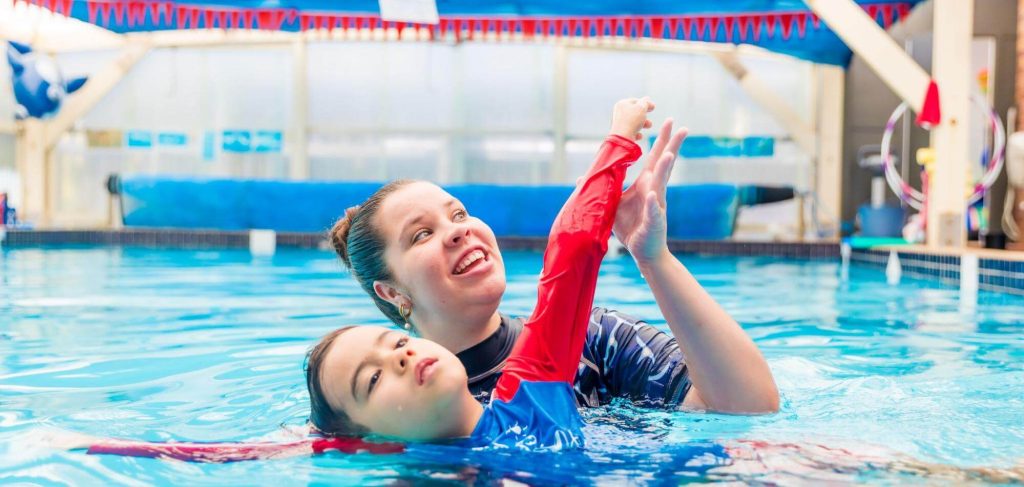
It’s not about “how long”. It’s about “what comes next”.
At some point, most parents find themselves asking the same question. How long should children do swimming lessons?
It often comes after a moment that feels like progress. Your child can move independently through the water, follow instructions, and appear confident during lessons. From the outside, it can look like they have reached a point where lessons are no longer necessary.
But swimming does not really work in a straight line.
What looks like completion is often just the beginning of a deeper stage of learning. Swimming is not a skill that is finished once a child can move from one side of the pool to the other. It’s a life long quest for perfect unity with the water. An effortless sense of being at home in the water.
When you begin to see it this way, the question shifts. It becomes less about how long lessons should last and more about what your child has to learn to be safer in the water for the rest of their lives.
Why the Question Comes Up So Early
For many families, swimming lessons begin with a very clear intention. Water safety.
Parents want their child to feel comfortable in the water and to have the basic skills needed to stay safe. Once those early signs of confidence appear, it is natural to feel like the goal has been achieved.
This is where the question begins.
If a child can float, move, and listen to instructions, it can feel like they have learnt enough. But these early skills are only one part of the bigger picture.
What is often less visible is how those skills hold up when conditions change. Children are still learning how to manage the reduction in the gravitational forces whilst in the water before they feel comfortable holding the water with their hands and feet so they can move through it.
That difference is important, and it is usually why lessons continue beyond the early stages.
What Parents Often See and What They Don’t
From the poolside, progress is easy to recognise. A child who once needed constant support is now moving independently. They follow instructions, participate in activities, and appear relaxed in the water.
What is not always visible is how stable that ability really is.
Swimming in a controlled lesson environment is very different from swimming in a new or unfamiliar setting. Water depth, temperature, noise, and distractions all influence how a child responds.
A child may look confident in a familiar pool but still feel unsure when something changes.
This is where continued lessons play an important role. They help children build not just movement, but adaptability. Over time, children learn how to respond, not just perform.
So, How Long Should a Child Have Swimming Lessons For?
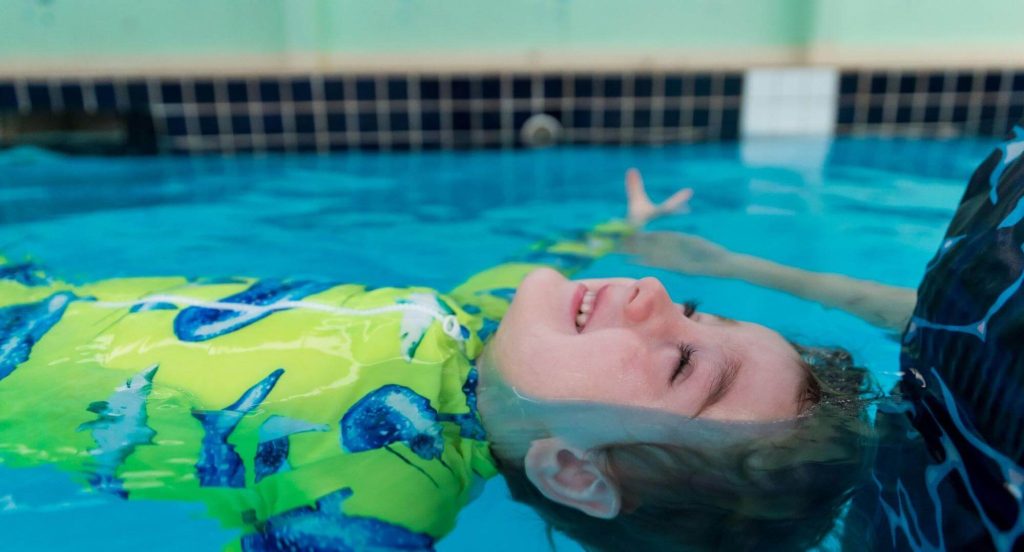
There is no single answer that applies to every child.
Rather than thinking in terms of a fixed timeframe, it helps to think in terms of development. Swimming lessons continue for as long as a child is still building capability.
That capability includes more than physical skill. It includes awareness, decision-making, and the ability to remain calm in different situations.
Some children may reach this point earlier. Others may take longer. Both paths are completely normal.
The focus should not be on how quickly a child progresses but on how well those skills are understood and retained.
A Shift in Perspective From Lessons to Capability
It could be better to raise a different question than “When should lessons stop?”
What can my child confidently manage in the water?
This shifts the focus away from completion and towards capability.
Capability includes being able to stay calm when something feels unfamiliar, understanding personal limits, and knowing how to respond when things do not go as expected.
These are not skills that develop in a short period of time. They are built gradually through consistent exposure and guided learning.
When viewed this way, swimming lessons become part of a longer journey rather than a short-term activity.
It’s Never Too Late to Start
Another question that often comes up is whether it is too late to begin.
Parents sometimes worry that if their child has not started early, they may have missed an important window. A common example is asking whether seven is too late to learn to swim.
It is not.
Children who begin later often bring different strengths to the learning process. They can understand instructions more clearly, process feedback, and approach learning with greater awareness.
While their starting point may look different, their ability to build confidence and skill is just as strong.
What matters most is not when a child starts, but how consistently they are supported once they do.
The Role of Consistency in Real Progress
Consistency is one of the most important factors in long-term swimming development.
Children who attend lessons regularly begin to feel more familiar with the water. Movements become more natural, and confidence builds steadily over time.
When lessons are irregular or stop too early, children may still remember what they have learned, but they may not feel as comfortable applying those skills in different situations.
Consistency allows children to revisit and reinforce what they know. It gives them the opportunity to build on their progress without interruption.
Why Time in the Water Matters
“Learning to swim isn’t something that happens overnight. Real confidence in the water comes from consistent exposure over time. The more regularly children are in the pool, the more comfortable and capable they become. We often see that children who attend lessons consistently not only progress faster with their swimming skills but also feel calmer, more confident and more independent in the water. Swimming is about building lifelong water confidence, and that takes time, patience and regular practice.”
— Shapland Swim Schools Instructor
What Long-Term Swimming Actually Builds
Over time, swimming lessons begin to support a broader range of development.
Children develop a deeper understanding of how their bodies move in the water. They learn how to control their breathing, adjust their movements, and manage their energy.
This is also where physical benefits become more noticeable.
Swimming supports coordination, endurance, and controlled breathing. Parents often ask whether swimming is good for lung capacity. When practised regularly, it can help children develop stronger breathing patterns and better overall stamina.
These benefits are not immediate. They build gradually through consistent participation.
When Confidence Isn’t the Same as Readiness
One of the more challenging aspects for parents is recognising the difference between confidence and readiness.
A child may look confident in a familiar setting, but that does not always mean they are prepared for new environments.
Different conditions can change how a child responds. Deeper water, open spaces, or unfamiliar surroundings can all introduce new challenges.
Continued lessons help children develop the ability to adapt. They learn how to stay calm, assess their environment, and respond appropriately.
This adaptability is a key part of long-term water safety.
A Story That Reflects the Journey
“One little boy I taught was incredibly confident from the very beginning. He loved the water, jumped straight in without hesitation and picked up the basics quite quickly, so at first glance it looked like he was already a ‘strong swimmer’. But over time, we started focusing on the deeper skills like pacing himself, understanding how to stay calm when he got tired and making safe decisions in different situations.
As he continued lessons, you could really see the difference. His swimming became more controlled, his endurance improved and he became much more aware of his surroundings in the water. What stood out most was how his confidence matured. It wasn’t just excitement anymore; it was real capability and understanding.
That’s something we see often. Early confidence is wonderful, but long-term swimming lessons help turn that confidence into genuine water safety skills that stay with children for life.”
— Shapland Swim Schools Instructor Team
Why Swimming Doesn’t Have a Clear End Point
Swimming is not a skill with a defined finish line.
There is no single moment where a child has learned everything they need. Instead, it continues to develop over time.
Children refine their technique, build endurance, and deepen their understanding of water safety. Even confident swimmers continue to improve as they grow.
Research into swimming and water safety education also supports the idea that skills develop over time. For example, studies on children’s swimming and water safety programs show that ongoing exposure helps build awareness, confidence, and safer behaviour around water.
What to Look for Instead of “Finished”
Rather than asking when lessons should stop, it can be more helpful to look for signs of readiness.
Can your child stay calm when they feel tired?
Do they understand how to respond in unfamiliar situations?
Are they aware of their surroundings and their own limits?
One of the most important things is can they swim without goggles?
Can your child swim for 200m without stopping and without getting fatigued?
These are the indicators that swimming has become more than a learned skill.
They show that a child is developing real confidence and awareness in the water.
Supporting the Journey at Home
Swimming development does not only happen during lessons.
Children’s understanding of water is shaped by everyday experiences. Conversations about safety, time spent near water, and consistent routines all contribute to their confidence.
Families can support this by reinforcing calm, safe behaviour and encouraging familiarity with water in different settings, including finding small ways to keep your child motivated and excited about swimming.
A Longer View That Makes a Difference
“How long should children do swimming lessons?”
The answer becomes clearer when you take a step back.
Swimming is not something children complete.
It is something they grow into over time, through experience, consistency, support that and practice.
What This Means for Families
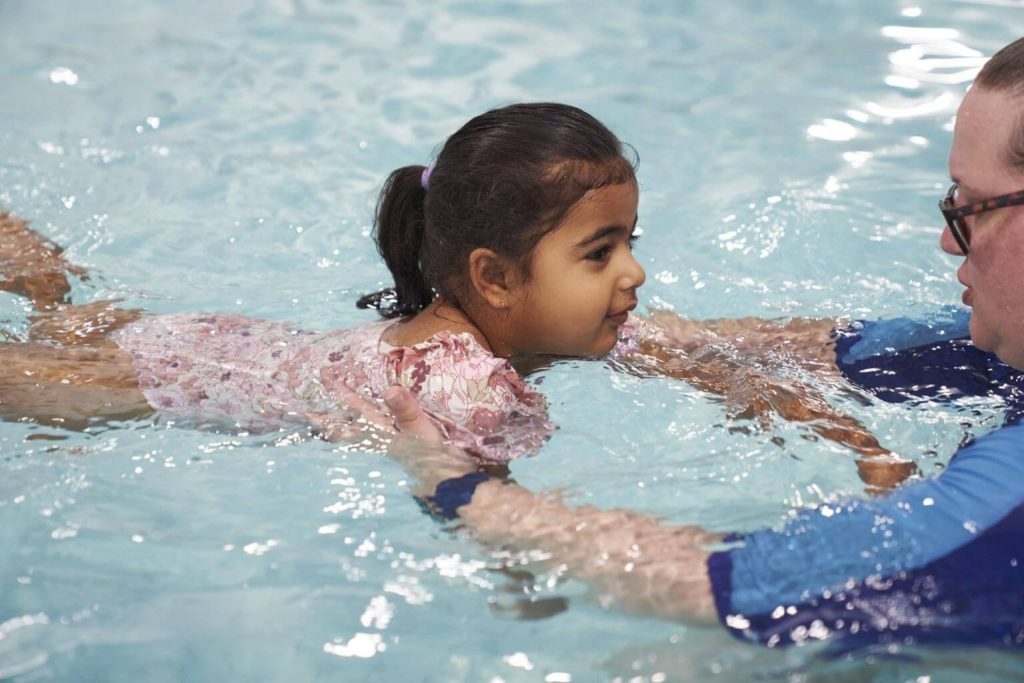
At Shapland Swim Schools, the focus is not on rushing progress or moving children through levels quickly.
It is about creating an environment where children feel supported, lessons remain consistent, and confidence builds naturally as correct swimming technique is developed because it is this correct technique that can allow you to swim effortlessly for long periods of time, as Chris Shapland proved when, at the age of 69, he swam for 16 hr 28 min 28 sec across the English Channel. His own words describe the swim: ‘Physically it was not hard; it was just a long relaxed swim.’
Because when swimming is approached this way, it becomes more than just a skill.
It becomes something your child carries with them for life.