
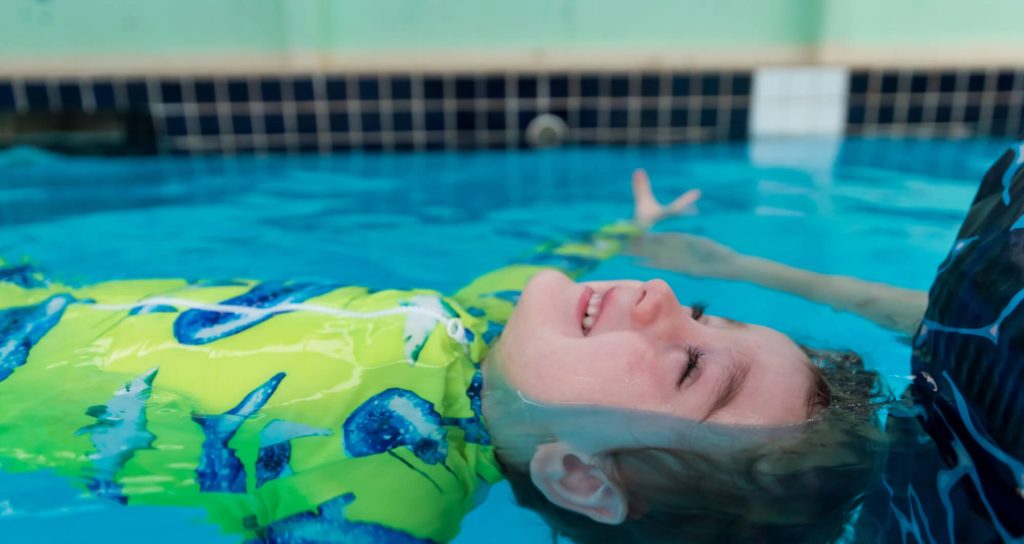
If you’ve ever watched your child’s swimming lesson from the sidelines and wondered, “How do swimming lessons work?”, well, you’re not alone. Swimming lessons follow a structured format designed to help children build confidence, water safety skills and swimming ability over time. A typical lesson includes skill practice, teacher feedback, guided activities, and progression-based learning that suits each child’s stage of development.
From the outside, a lesson can sometimes look simple. A child might be kicking across the pool, working on breath control, practicing floating, or playing a quick game with their teacher. But behind each of those activities is a reason.
Swimming lessons are carefully planned to help children learn in small, achievable steps. Each class builds on the last, helping children feel safer, more confident, and more capable in the water.
For parents who are new to swimming lessons, it can be helpful to understand what actually happens during a class and why those little moments matter.
Why Swimming Lessons Are Structured
Children do not usually learn to swim by practising one big skill all at once. They learn through a series of smaller steps that gradually connect over time.
A structured swimming lesson helps children build:
- Confidence in and around the water
- Safe pool behaviours
- Adapting to reduced gravitational forces acting on their bodies.
- Learning breath control
- Floating and body position
- Holding the water with their hands and feet.
- Early swimming technique
- Independence over time
Swimming involves a lot of different skills working together. Before a child can swim confidently across the pool, they need to learn how to put their face in the water, control their breathing, keep their body balanced, kick effectively, and stay calm.
That is why repetition is such a big part of swimming lessons. When children practise a skill again and again with the right support, they start to understand what it should feel like. Over time, those small moments begin to connect.
At Shapland, our lessons are designed to be calm, focused and purposeful. With only three children per class and a maximum of two classes in the pool at once, children have more time with their teacher and fewer distractions around them.
Why Shapland Lessons Are 20 Minutes
One question we often hear from parents is, “Why are your classes only 20 minutes?”
It is a fair question, especially when parents are comparing different swim schools. But at Shapland, 20 minutes has always been a very intentional part of the way we teach.
When the first Shapland Swim School opened in Clontarf in 1973, classes originally ran for 30 minutes with around four to six children in each group. Over time, something became clear. Around the 20-minute mark, many children started to lose focus.
For little learners, that makes sense. Swimming lessons ask a lot from children. They are listening, moving, concentrating, following instructions, practising skills and building confidence in the water all at once. After a certain point, their focus naturally starts to fade.
So, Shapland made a change.
Lessons became shorter, class sizes became smaller and the program moved to 20-minute lessons with a maximum of three children per class. Over the past 5 decades, the specialised teaching pool developed from 5 different water depths to 11 different water depths. 50mm deeper water can make a massive difference to a child’s confidence.
The result was simple but important: happier children, better focus and stronger progress.
A 20-minute lesson gives children enough time to practise key skills, receive feedback and build confidence, without becoming too tired or overwhelmed. It keeps the lesson purposeful, positive and suited to the way young children learn best.
More than 50 years later, that model is still at the heart of Shapland Swim Schools. Our lessons are short, focused and designed to make every minute count.
Before the Lesson Begins
The learning often starts before the first activity even begins.
When children arrive for their class, the teacher is already paying attention to how they are feeling. Are they excited? Nervous? Tired? Unsure? Some children are ready to get started straight away, while others need a little more time to settle.
For new swimmers, this part of the lesson is especially important. A teacher may use a familiar greeting, a gentle routine or a simple first activity to help the child feel comfortable. If a child has been attending for a while, the teacher may also think about what they worked on last week and what needs to be practised again.
This preparation helps set the tone for the lesson. Children learn best when they feel safe, calm, and connected to the person teaching them.
The First Few Minutes: Building Confidence and Connection
The first few minutes of a swimming lesson are often about helping children settle, focus, and feel ready to learn.
This might include a familiar revision warm-up activity, a simple water confidence exercise, or a skill the child already knows well. For younger children, this part of the lesson may look playful. For older or more confident swimmers, it may look more like a short practice activity.
Either way, the goal is the same. The teacher is helping the child feel comfortable in the water and ready for the next step.
This connection matters. Children are far more likely to try new things when they trust their teacher. A calm start can make a big difference, especially for children who are still building confidence or who feel unsure in the water.
Skill Development Activities
The main part of the lesson is where children practise the skills they need for their current level.
Depending on the child’s stage, this may include:
- Developing balance and breath control
- Putting their face in the water
- Floating on their front or back
- Kicking with support
- Practising safe entries and exits
- Moving through the water
- Improving body position
- Learning arm movements
- Combining breathing rhythm, kicking, and the correct pull and arm recovery.
These activities are not random. Teachers break bigger swimming skills into smaller parts so children can learn in a way that feels manageable.
For example, a child may not be ready to swim independently yet, but they might be ready to practise a strong kicking action while holding support. Another child may be moving through the water confidently but still need help keeping their body position steady. A more advanced swimmer may be working on improving technique and becoming more efficient.
In a structured lesson, each activity has a purpose. Even something as simple as floating can teach a child how to relax, balance their body, and feel safer in the water.
Instructor Feedback and Individual Support
One of the most important parts of a swimming lesson is the feedback children receive from their teacher.
A good instructor is constantly watching. They are looking at how the child is moving, how confident they seem, whether their body position is improving, and what small correction might help them progress.
Sometimes this feedback is verbal, such as reminding a child to kick from their hips or keep their body long. Sometimes it is physical guidance, especially for younger children who need help feeling the correct position in the water. Sometimes it is encouragement, because confidence is just as important as technique.
This is where smaller class sizes can make a real difference.
In a larger class, it can be harder for a teacher to notice the little things. In a smaller class, children have more opportunities to practise, receive feedback, and try again.
At Shapland, with only three children in each class, teachers can get to know each child properly. They can see when a child needs more support, when they are ready for a challenge and when they simply need a bit of reassurance.
Water Safety Skills Throughout the Lesson
Water safety is not usually taught as one separate part of the lesson. It is woven into everything children do.
During a swimming lesson, children may learn how to:
- Enter and exit the pool safely
- Wait for their teacher’s instruction
- Hold the edge
- Turn back to safety
- Float and regain control
- Move safely through the water
- Understand basic pool rules
- Build awareness of their surroundings
- And most importantly – the water will always support their body weight
These skills help children become safer and more confident around aquatic environments.
For younger children, water safety may start with simple habits, like waiting before entering the pool. For older children, it may involve more independent skills, such as turning around, finding the wall or swimming a short distance to safety.
The goal is not just to teach children how to swim from one side of the pool to the other. It is to help them understand how to behave around water and what to do when they are in it.
How Progress Is Built Over Time
Swimming progress is not always immediate, and it does not always look the same for every child.
Some children gain confidence quickly but take longer to refine their technique. Others may be physically capable but need more time to feel comfortable putting their face in the water. Some children progress steadily each week, while others seem to stay in the same place for a while before suddenly making a big leap.
This is normal.
Swimming is a long-term skill. Progress is built through repetition, consistency and small improvements over time. A child may practise the same skill many times before it becomes natural. That does not mean they are not learning. It means their body and brain are building familiarity.
This is one of the reasons regular lessons are so valuable. Each class gives children another chance to practise, receive feedback and build on what they have already learned.
At Shapland, the pool design also supports this kind of step-by-step learning. With different depths throughout the pool, children can practise skills in a way that suits their height, confidence and stage of development.
Why Swimming Lessons Sometimes Look Like Play
One question parents often ask is, “Why does it look like my child is just playing?”
This is a very fair question.
For young children especially, play is one of the best ways to learn. A game might be helping a child practise kicking. A toy might encourage them to reach, move forward, or put their face closer to the water.
To a parent watching from the side, it may look like a simple activity. To the teacher, it is a way to help the child practise an important skill without pressure.
Play-based learning can help children feel relaxed and engaged. It also makes repetition easier. A child may not want to practise the same movement over and over if it feels too serious, but they may happily repeat it through a game.
One of Chris Shapland’s favourite piece of advice when conducting workshops is, ‘Invent a game that teaches a skill.’
This does not mean the lesson is unstructured. In fact, the best play-based learning is very intentional. The activity may feel fun for the child, but it still has a clear learning purpose behind it.
What Parents Should Look For During a Lesson
When you are watching your child’s swimming lesson, it can be helpful to look beyond whether they are moving across the pool.
Some signs of a quality lesson include:
- The teacher is engaged and attentive
- Children are given individual feedback
- Activities match the child’s level
- The class feels calm and well supervised
- Children are encouraged, not rushed
- Skills are repeated with purpose
- Water safety is included throughout the lesson
- The teacher adjusts their approach for different learners
It is also worth noticing how your child feels. Are they becoming more comfortable? Are they willing to try? Are they starting to trust their teacher? Are they building independence over time?
Progress is not only about distance or speed. Confidence, body control, listening skills, and water awareness are all important parts of learning to swim.
Understanding the Value Behind Every Lesson
A swimming lesson is not just 20 minutes in the pool. It is a carefully structured learning experience designed to build confidence, safety skills, and swimming ability one step at a time.
Every activity has a purpose, even when it looks small. Floating helps with balance and breath control. Kicking builds movement. Games help children practise skills in an age-appropriate way. Teacher feedback helps children understand what to adjust and how to improve.
Over time, these small moments add up.
For parents, it can be reassuring to know that children do not need to master everything straight away. Learning to swim takes time, and every child progresses differently. What matters most is that they are supported, encouraged, and taught in a way that helps them feel safe and confident.
At Shapland Swim Schools, our lessons are designed around calm, consistent learning. With small classes of only three children, warm 32°C multi-depth magnesium mineral pools, a quiet environment, and teachers who take the time to understand each child, we aim to make swimming lessons feel positive, purposeful, and supportive from the very beginning.
Frequently Asked Questions
How do swimming lessons work?
Swimming lessons work by teaching children skills in a structured, step-by-step way. A lesson usually includes confidence-building activities, water safety skills, technique practice, teacher feedback, and repetition. Over time, children build the skills they need to become safer and more confident swimmers.
What happens during a swimming lesson?
During a swimming lesson, children practise skills suited to their level. This may include floating, kicking, breathing, body position, safe entries and exits, movement through the water, and early swimming technique. Teachers guide children through activities, provide feedback, and help them progress at their own pace.
Why do swimming lessons use games and activities?
Games and activities help children learn in a way that feels natural and engaging. For younger children, play can make repetition easier and less overwhelming. Many games are designed to practise specific swimming skills, even if they look simple from the outside.
How are swimming skills taught to children?
Swimming skills are taught by breaking larger movements into smaller steps. Children might first practise balancing and breath control activities that lead to floating, then kicking, before gradually combining those skills. Teachers adjust activities based on the child’s confidence, ability, and stage of development.
What should parents expect from a swimming class?
Parents should expect a structured lesson where the teacher is engaged, children are supervised closely, and skills are taught progressively. It is normal for lessons to include repetition, games, correction, and encouragement. Progress may be gradual, but each lesson should help build confidence, safety, and ability.
How long does it take to learn swimming skills?
Every child is different. Some children progress quickly, while others need more time to feel confident and comfortable. Consistency is important. Regular lessons help children practise skills, build trust with their teacher, and continue improving over time.
Ready to Understand the Difference a Structured Lesson Can Make?
When you know what is happening behind each activity, swimming lessons start to look very different. They are not just about getting from one side of the pool to the other. They are about helping children build confidence, learn water safety, develop technique, and feel more capable around water.
If you are comparing swim schools, look for a program that feels calm, structured, and supportive. Small class sizes, attentive teachers, and a clear progression pathway can make a big difference to how children learn. Shapland’s unique swim-in-five program has been in a constant state of improvement since 1947.
At Shapland Swim Schools, we believe children learn best when they feel safe, supported, and understood. Our small classes, warm magnesium mineral pools, and quiet learning environment help children build skills at their own pace, one lesson at a time.