
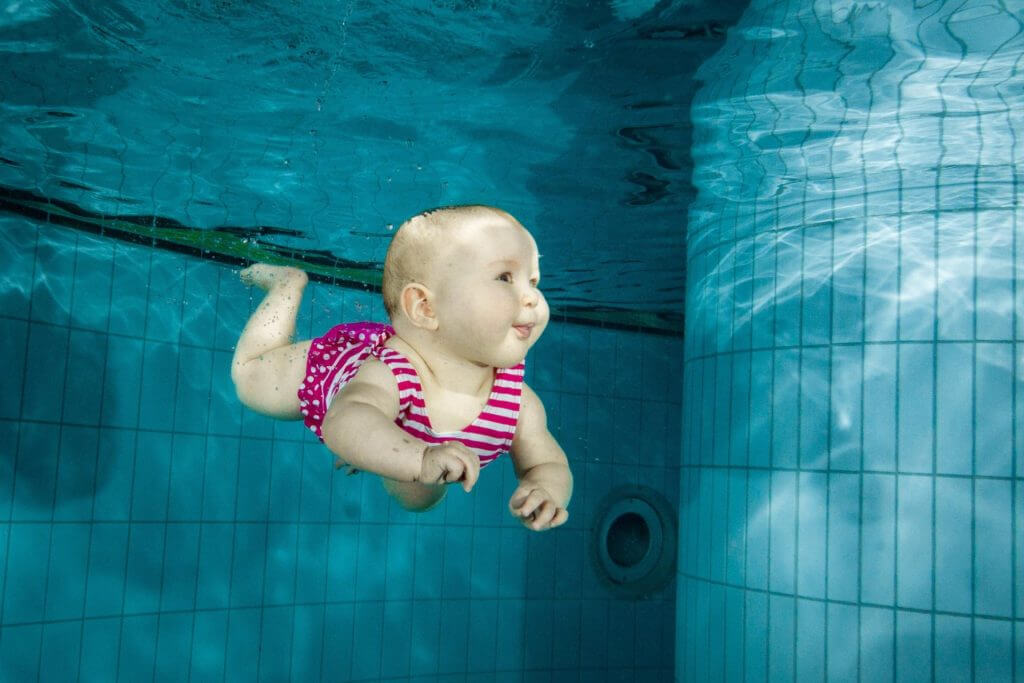
Yes, infant swim lessons can absolutely be worth it. While babies are not expected to swim independently, regular lessons help them become comfortable in the water and build upon their innate feeling of weightlessness acquired in the womb, build early confidence, and develop the Breath Control they need for a lifetime of safer swimming.
For many parents, the question is understandable. If your baby is still learning to crawl, talk, or walk, it can be hard to imagine what they could really learn in a swimming lesson. Some parents wonder whether it is better to wait until their child is older. Others want to start early but are unsure what progress should actually look like.
The value of infant swimming lessons is not measured by how quickly a baby learns to swim across the pool. It is measured by the confidence, comfort, and continuing to develop the relationship with the liquid environment they have inhabited for the first 40 weeks since conception.
Infant lessons are about helping babies feel safe and happy in the water, supporting early development and giving families a gentle, guided way to make swimming part of everyday life. They are also a special bonding experience for parents and babies and often become a lovely weekly routine where families connect with each other too.
Why Parents Consider Infant Swimming Lessons
There are many reasons families start swimming lessons early.
For some parents, water safety is the biggest motivation. In Australia, water is part of everyday life. Pools, beaches, dams, rivers, and backyard play are common, so many families want their children to feel familiar with the water from a young age.
For others, it is about confidence. Parents want their baby to enjoy the water rather than feel frightened or unsure when they are older. Early swimming lessons can help babies become used to the feeling of water on their face and eyes, the sound of the pool, the movement of the water, and being held in different positions.
There is also the bonding side of lessons. Infant swimming classes are not just about the baby learning. They are also about a parent or caregiver being in the water with them, playing, holding, encouraging, and celebrating little milestones together.
For many families, this becomes a special part of the week. It is time away from the rush of home, work, and routines. It is 20 focused minutes where you are in the water together, helping your baby learn, reconnect with a liquid environment, and feel safe.
It can also be a lovely way for parents to meet other families at a similar stage. When you are in a class with other babies, you often start to recognise the same faces each week. Parents chat before and after lessons, share little moments, and feel part of a small community.
Are Swimming Lessons Good for Babies?
For most babies, swimming lessons can be a positive and valuable experience when they are gentle, age-appropriate, and taught in a supportive environment.
At this age, lessons are not about pressure or performance. Babies learn through repetition, games, movement, and familiar routines. A good infant swimming class should feel calm, encouraging, and responsive to each baby’s needs.
Infant lessons can help babies:
- Reconnect with the water
- Build comfort being held and moved in the pool
- Develop confidence through gentle repetition
- Learn early cues and routines
- Begin building body awareness
- Enjoy positive time with their parent or caregiver
- Develop early foundations for future swimming skills
The role of the instructor is important. A good teacher helps guide parents through each activity, explains what the skill is building, and supports each baby at their own pace.
Chris Shapland developed a world’s first method of reintroducing babies to being weightless using natural consequences, which, after all, are the way babies learn. It is a trauma-free method and allows your baby to feel they are in control. At Shapland, our small class sizes and quiet pool environment help make this experience feel more personal and less overwhelming. With only three children per class and a maximum of two classes in the pool at once, families can enjoy a calmer space where babies have the time and reassurance they need.
What Infant Swim Lessons Are Really Designed to Teach
One of the biggest misconceptions about infant swimming lessons is that babies are there to learn to swim independently.
That is not the goal.
Infant lessons are designed to reintroduce babies to how their bodies react in a weightless environment and to start to learn how to control their breathing when they submerge. In the early stages, babies may learn to:
- Feel comfortable in the water
- Move with support
- Experience water supporting their body weight
- Practise gentle floating positions
- Build breath control
- Develop trust with their parent and teacher
- Enjoy the pool environment
A baby may not be “swimming” in the way an older child swims, but they are still learning. They are reconnecting with the water as a safe and familiar place. They are learning how their body feels in the pool. They are learning routines, sounds, movement, and confidence.
These early experiences help prepare children for the next stages of their swimming journey.
What Progress May Look Like in the First 3 Months
In the first few months, progress using Chris Shapland’s unique method of natural consequences is rapid.
Most babies settle quickly and enjoy the water from their first lesson. Others may need more time. Both are completely normal.
During the first three months, parents may notice their baby:
- Becoming more relaxed when entering the pool
- Responding positively to unassisted submersion
- Moving their arms or legs as they explore ways to hold the water
- Becoming more comfortable being held in different positions
- Showing more interest in the lesson
- Building trust with the teacher
- Enjoying the routine of coming to swimming each week
For many babies, the biggest achievement in the first few months is simply feeling happy and settled in the water as they reconnect with a familiar environment.
That may not sound dramatic, but it matters. A baby who feels calm and confident in the pool is building a positive foundation for future learning. This can make the transition into toddler and preschool swimming lessons much smoother later on.
It is also important to remember that babies have good days and harder days. Some weeks they may be tired, hungry, teething, or less interested. That does not mean the lessons are not working. It is all part of learning with little ones.
What Progress May Look Like After 6 Months
After six months of consistent lessons using the Shapland method, babies become much more familiar with submersion by developing their breath control.
They may show greater confidence during activities, respond more clearly to routines, and become more engaged in the lesson. Parents may notice their baby starting to anticipate certain parts of the class, enjoy favorite activities, or feel more relaxed when water touches their face.
After six months, progress may include:
- Being able to float on top of the water for longer and longer periods of time
- More confidence during guided activities
- Improved body awareness
- Stronger responses to cues and routines
- Better participation in balance and breath control activities
- More relaxed movement in the pool
- Stronger foundations for future learn-to-swim levels
Again, the goal is not independent swimming. The goal is steady, positive progress.
When babies attend lessons regularly, the water becomes familiar. They learn that swimming is part of life. They begin to associate the pool with safety, connection, and enjoyment.
That is a powerful foundation.
What Is the Best Age to Start Swimming Lessons for Babies?
There is no single perfect age for every child to start swimming lessons; however, if you download Shapland’s home development plan, babies’ swimming lessons start with their first bath.
At Shapland, babies can begin formal swimming lessons from 5 months of age. This is a lovely stage for many families because babies are becoming more alert, interactive, and aware of their surroundings.
That said, readiness is not only about age. It can also depend on your baby’s health, temperament, routine, and your own comfort as a parent. Some families are ready as soon as their baby is old enough to begin. Others feel more comfortable waiting a little longer.
Both are okay.
The benefit of starting early is that babies have more time to build comfort and confidence before the toddler years. When children are introduced to the water in a gentle and consistent way, swimming can feel familiar rather than frightening.
For parents who are unsure, it can help to visit the swim school, ask questions and find out how the infant program works before enrolling.
The Long-Term Benefits of Starting Early
Infant swimming lessons are not just about what happens in the first few months. They are about setting children up for a long-term relationship with the water.
Starting early can help children build:
- Breath control
- Comfort in aquatic environments
- Positive associations with swimming
- Early listening and participation skills
- Familiarity with pool routines
- A smoother transition into independent learn-to-swim classes
- Ongoing awareness of water safety
These foundations can support children as they grow. A baby who has spent time in the water from an early age may feel more comfortable moving into toddler classes, then preschool lessons and later more structured swimming levels.
Swimming is a life skill. When children build confidence early, they are taking the first steps towards a lifetime of safer, more enjoyable swimming.
Of course, no lesson can ever replace active adult supervision around water. Children still need to be watched closely at all times. But swimming lessons can support the broader picture by helping children become more familiar, more confident, and more capable around water as they grow.
The Bonding Benefits for Parents and Babies
One of the most beautiful parts of infant swimming lessons is the bonding experience.
In a baby class, parents are not sitting on the sidelines. They are in the water, holding their baby, smiling, using encouraging words and helping them explore the pool safely. That shared experience can be really special.
For babies, having their parent or caregiver close by helps them feel secure. They learn through your voice, your touch, and your reassurance, and most importantly, the way they learn on land, thanks to Chris Shapland, is replicated in the pool. For parents, it is a chance to slow down and be fully present with your baby in an educational environment.
Those little moments matter. The first time your baby happily submerges without any help and relaxes into a floating position. The first time they smile as they reconnect with the power of the water. These are small milestones, but they can become treasured memories.
Infant lessons can also help parents feel more confident around water. You learn how to hold your baby safely, how to support them during activities, and how to make water experiences positive outside of lessons, and most importantly, you will learn to understand and practice the unique Shapland natural consequences method.
A Chance to Connect With Other Parents
Infant swimming lessons can also be a lovely social experience.
Parenting a baby can sometimes feel isolating, especially in the early months. A weekly swimming class gives families a reason to get out of the house, enjoy a routine, and spend time with other parents who are at a similar stage.
Over time, you may find yourself chatting with the same families each week. You celebrate little wins together, share the funny moments, and get to know each other in a relaxed setting.
For babies, seeing other little ones in the water can also be encouraging. They hear the songs, watch the activity, and become part of a shared learning environment.
At Shapland, our smaller classes help make this feel more personal. With only three children in a class, it is easier for parents to connect, feel comfortable, and enjoy the experience together.
Common Misconceptions About Infant Swim Lessons
“My baby should be swimming independently.”
Babies are not expected to swim independently. Infant lessons are about reconnection with weightlessness, confidence, and early foundations. Independent swimming comes much later, after children have developed the strength, coordination, understanding, and maturity needed for more advanced skills.
“Lessons are only about water safety.”
Water safety is an important part of infant swimming lessons, but it is not the only benefit. Lessons also support confidence, bonding, body awareness, water familiarity, and positive associations with swimming.
“Babies are too young to learn anything.”
Babies are learning all the time. They learn through repetition, touch, sound, movement, and routine and, most importantly, experiencing a natural consequence. In swimming lessons, they may be learning how water feels, how to respond to cues, how to move without support, and how to feel comfortable in the pool.
“There is no benefit until they are older.”
Older children can absolutely learn to swim, but early lessons help the baby reconnect with a weightless environment they spent the first 40 weeks of their lives floating around in. This can help reduce fear, support confidence, and make future lessons feel more natural.
Are Infant Swim Lessons Worth the Cost?
For many families, yes, infant swim lessons are worth the investment.
The value is not just in immediate swimming ability. It is in the confidence your child builds, the comfort they develop, and the positive relationship with water that grows over time.
It is also in the time you spend together. Infant lessons give parents and babies a shared weekly experience that is meaningful, practical, and enjoyable. You are not only helping your baby become familiar with water. You are also creating a routine that supports connection, confidence, and long-term learning.
When you look at the bigger picture, infant swimming lessons are an investment in your child’s future around water. They help lay the groundwork for safe swimming habits, smoother progression, and a lifelong comfort in aquatic environments.
Swimming is something children can enjoy for the rest of their lives. Starting early can help make that journey feel natural, positive, and safe from the very beginning.
Looking at the Bigger Picture
The value of infant swimming lessons is not measured by how fast a baby learns to swim. It is measured by the confidence, comfort, and familiarity that develop over time.
In the first few months, under the Shapland method, progress is very rapid as the baby reconnects with weightlessness. After six months, babies plateau in terms of being comfortable with floating on top of the water for longer and longer periods of time. It’s developing a grip on the water with their hands and feet, which then becomes a challenge your instructor will guild you through in terms of what to look for under the water as the baby starts to hold the liquid environment with their hands and feet.
These are all meaningful milestones.
Infant lessons help set children up for future swimming success by creating positive early experiences. They also give parents a chance to bond with their baby, meet other families, and feel more confident supporting their child around water.
At Shapland Swim Schools, our infant lessons are designed to be gentle, supportive, and calm. With warm 32°C magnesium mineral pools, small classes of only three children and a quiet learning environment, babies can build confidence as they quickly reconnect with being weightless and develop their breath control
Frequently Asked Questions
Are infant swim lessons worth it?
Yes, infant swim lessons can be worth it because they help babies build comfort and confidence and reconnect with the water and develop the breath control needed to be able to submerge. They are not about teaching babies to swim independently straight away. They are about creating positive early experiences that support long-term swimming development.
Are swimming lessons good for babies?
Swimming lessons can be very positive for babies when they are gentle, age-appropriate, and taught in a supportive environment. They can help babies reconnect with water, build confidence, develop breath control, enjoy bonding time with their parent, and develop early foundations for future swimming skills.
What is the best age to start swimming lessons for babies?
There is no perfect age for every child, but at Shapland babies can begin from 5 months. Some families like starting early because it helps make the water feel familiar from a young age. Readiness can also depend on your baby’s routine, health, and temperament and your own comfort as a parent. Shapland’s Home Development Program allows you to do a lot of the foundation work at home starting from the baby’s first bath.
Do infant swim lessons work?
Yes, infant swim lessons can work when the goal is understood properly. They help babies reconnect with weightlessness and develop their breath control as they submerge, learn routines, respond to cues and build confidence. They are not designed to make babies independent swimmers in the first few months.
Can babies learn anything from swimming lessons?
Yes. Babies learn through repetition, movement, sound, and routine. In swimming lessons, under the Shapland method, they reconnect with a liquid environment, simple cues, supported movement, and confidence in the pool environment.
What should parents expect from infant swimming lessons?
Parents should expect gentle, guided activities that involve songs, games, movement, and water familiarisation. A parent or caregiver is usually in the water with the baby, helping them feel secure and supported throughout the lesson.
How long does it take babies to become comfortable in the water?
Every baby is different. Some babies become comfortable quickly, while others need more time. With regular lessons, many babies become more familiar and relaxed over the first few months. Consistency, patience, and a calm environment can make a big difference.
Ready to Start Your Baby’s Swimming Journey?
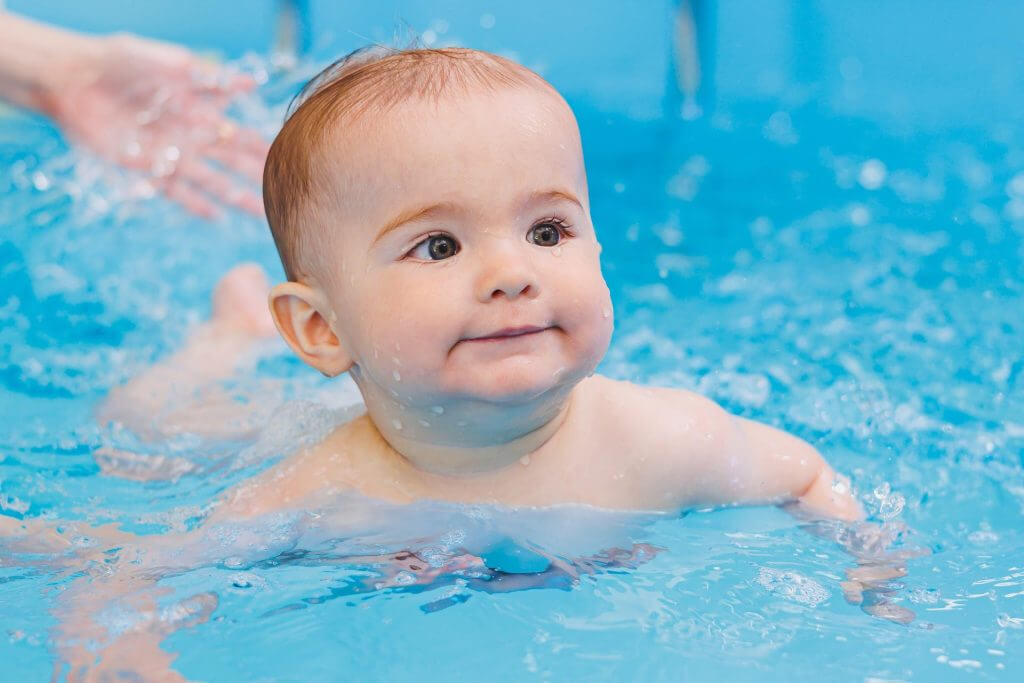
Infant swimming lessons are about so much more than learning strokes. They are about confidence, comfort, bonding, and reconnecting with the water as they learn how to hold their breath when submerging.
If you are thinking about starting lessons, look for a swim school that understands babies, supports parents, and creates a calm, gentle learning environment and, most importantly, has a long history of developing a world’s first natural consequences method of making babies’ swimming trauma-free.
At Shapland Swim Schools, we help little swimmers build confidence one step at a time. Our small classes, warm magnesium mineral pools, and supportive teachers make infant swimming lessons a positive experience for the whole family.