
Learning how to choose a swim school can feel like a bigger decision than you first expected. A good swim school should have qualified teachers, small class sizes, a clear learning program, strong safety standards and an environment where your child feels safe enough to learn.
Of course, location and price matter. Families need lessons that fit into real life. But when you are choosing swimming lessons for your child, it is also worth looking at what the experience will actually feel like once they are in the water.
Will they feel supported? Will they have enough time with their teacher? Is the pool going to be quiet enough for them to listen and concentrate? Will they be gently encouraged, rather than rushed?
These things can make a big difference, especially for babies, toddlers, preschoolers and children who are nervous around water.
Many swim schools can look similar from the outside. They may all offer children’s lessons, warm pools, friendly teachers and different levels. But once lessons begin, the experience can vary a lot.
Some pools are busy and loud, with lots of children in the water and several large classes happening at once. Some children cope well with that. Others can find it overwhelming, particularly if they are still building confidence.
At Shapland Swim Schools, we have always believed that children learn best in a calm, personal and supportive environment. Our classes have only three children, with a maximum of two classes running in the pool at one time. That means there are only up to six children learning in the pool at once.
Our warm 32°C magnesium mineral pool water is also gentle on children’s eyes and skin, helping them enjoy their lessons without leaving the pool feeling itchy or uncomfortable with sore eyes.
So, how do you choose a swim school with confidence? Here are seven signs to look for.
Why Choosing the Right Swim School Matters
Swimming lessons are not just another weekly activity. They help children build confidence, learn safer habits around water and develop skills they can use for life.
A good experience in the water can shape how a child feels about swimming for years to come. When children feel safe, encouraged and understood, they are more likely to keep trying, even when something feels tricky.
On the other hand, if lessons feel too busy, rushed or overwhelming, some children can lose confidence before they have had a real chance to build it.
This is why the learning environment matters so much. Children need space to listen, practise and make mistakes. They need teachers who can notice when they are nervous, distracted or ready for the next step.
Some children will happily put their face in the water in their first lesson. Others need more time. Both are completely normal.
The right swim school should meet your child where they are, while still helping them move forward.
Sign #1: Qualified and Experienced Teachers
A good swimming teacher does much more than show children how to kick or paddle.
Teaching children to swim takes patience, skill and a good understanding of how children learn. A teacher needs to be able to break skills down into small steps, give clear instructions, manage the class safely and adapt to each child’s confidence level.
A baby in the water needs a very different approach from a school-aged child working on technique. A nervous swimmer may need gentle reassurance. A confident swimmer may need more challenge. A toddler may need repetition and play before a skill begins to click.
That is why qualified, experienced teachers matter.
A strong teacher will know when to help, when to encourage and when to give a child a little more independence. They will also understand that progress does not always look the same for every child.
At Shapland, we support our teachers through a structured programme and small class sizes, allowing them more time to focus on each swimmer. With only three children in a class, teachers are able to get to know each child properly and support them at their own pace.
The best teachers do not just teach children to swim. They help them feel brave enough to try.
Sign #2: Small Class Sizes
Class size is one of the biggest things to consider when choosing a swim school.
In a smaller class, children usually get more attention from their teacher. They have more turns, more time to practise and more opportunities to receive feedback.
In a larger class, children can spend more time waiting. Teachers may also have less time to notice the smaller details, like whether a child is holding their breath, kicking correctly or feeling unsure.
This is especially important for young children and beginners. When a child is still learning the basics, they need regular guidance and plenty of practice. They also need to feel seen by their teacher.
At Shapland Swim Schools, our classes have only three children. This has always been one of the most important parts of our approach.
With fewer children in each class, lessons feel more personal. Children have more time with their teacher and more chances to build each skill properly. It also helps create a calmer environment, because children are not waiting behind a large group or trying to learn in a crowded pool.
For parents, smaller classes can make progress easier to notice too. Your child is actively involved throughout the lesson, rather than spending most of the time waiting for their turn.
Sign #3: A Focused and Quiet Learning Environment
The feel of the pool matters more than many parents realise.
Some swim schools have multiple classes running at once, with lots of children in the water, plenty of noise and a lot happening around the pool. For some children, that can make it harder to listen and concentrate.
For others, it can feel overwhelming from the moment they arrive.
A calmer pool environment can help children settle more quickly. When there are fewer distractions, children often find it easier to hear their teacher, follow instructions and focus on what they are learning.
At Shapland, we only run a maximum of two classes in the pool at one time. With three children in each class, there are only up to six children learning in the pool at once.
This helps keep lessons quieter and more focused. It gives teachers room to teach, children space to learn and parents reassurance that their child is being properly supported.
We also have a separate parent viewing area, so families can watch comfortably while the pool area stays calm for the children. This can make a big difference, especially for nervous swimmers or children who are easily distracted.
The quieter environment is something many families refer to. It makes lessons less overwhelming and more personal.
Sign #4: Consistent Teachers
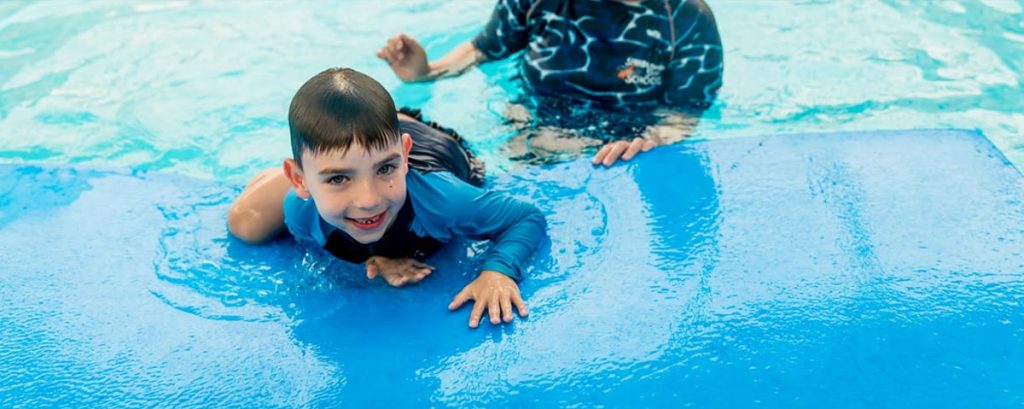
Children often learn best when they feel safe with the person teaching them.
Having a familiar teacher each week can help build trust. Over time, the teacher gets to know your child’s personality, confidence level, strengths and challenges.
This is especially helpful in swimming. A child may need to feel comfortable with their teacher before they are ready to put their face in the water, float on their back or move away from the wall.
When the teacher already knows your child, they can support those steps more gently.
Consistency also helps with progression. A regular teacher understands what your child has been working on, what they are ready to try next and where they may need a little more practice.
For parents, this can feel reassuring too. You are not starting from the beginning each week with someone new. Your child’s teacher knows where they are up to and can guide them from there.
That teacher-child relationship can be a big part of helping children feel confident in the water.
Good communication with parents is another sign of a quality swim school. Families should feel informed about what their child is learning, how they are progressing and which skills they are working towards next.
Regular feedback helps parents understand their child’s development and creates opportunities to support learning outside of lessons. It also gives families confidence that their child is progressing through a structured program rather than simply attending classes each week.
Building trust with a familiar instructor can play an important role in helping children become confident and independent swimmers over time.
Sign #5: A Structured Learning Program
Children do not learn to swim all at once. They build skills gradually.
Before a child can swim independently, they need to develop many smaller skills first. These may include water confidence, breath control, floating, kicking, safe entries and exits, listening skills, body position and movement through the water.
A good swim school should have a clear program that teaches these skills in the right order. Australia’s National Swimming and Water Safety Framework also recognises the importance of teaching swimming and water safety skills through a structured, staged approach that develops competency over time.
Children should not be rushed through levels before they are ready. At the same time, there should be a clear pathway, so families understand what their child is learning and what comes next.
At Shapland, our program has been refined over generations. Since 1947, we have helped children learn to swim through a method that focuses on confidence, safety and steady progress.
Our purpose-built pools also support this step-by-step learning. With 8 to 11 different depths, children can practise skills in a way that suits their stage, height and confidence level.
This means children can build independence gradually, without being pushed too far too soon.
A structured program should still allow for individual differences. Some children will move through certain skills quickly. Others may need more time, repetition and reassurance. Both are part of learning.
The goal is not to rush children through levels. The goal is to help them become calm, confident and capable in the water.
Sign #6: Lessons That Are the Right Length for Children
When comparing swim schools, it is easy to assume that a longer lesson must be a better lesson. But with young children, longer does not always mean more effective.
Children learn best when they are engaged, focused and still enjoying what they are doing. Research into physical literacy and childhood learning shows that children often learn most effectively when activities are developmentally appropriate, engaging and matched to their attention span.
Once they become tired, distracted or overwhelmed, it can be harder for them to listen, practise and take in new skills.
That is why lesson length matters.
At Shapland, our classes are 20 minutes long because we have found that this is the ideal window for children to stay focused and learn well.
It is a question we hear often: “Why are your classes only 20 minutes?”
The answer goes back to 1973, when the very first Shapland Swim School opened in Clontarf. Back then, classes ran for 30 minutes with 4 to 6 children. But something became clear quite quickly. Around the 20-minute mark, children’s focus began to fade.
So, the program changed.
The lessons became shorter. The class sizes became smaller. Instead of 30-minute classes with larger groups, Shapland moved to 20-minute lessons with a maximum of three children per class.
That shift made a real difference.
Children were happier, more engaged and able to make better progress. Teachers could keep lessons focused, active and suited to the way children actually learn.
It is a model that has worked for over 50 years, and it is still part of the Shapland approach today.
Rather than asking children to concentrate for longer than they are ready for, our lessons are designed around quality learning time. Shorter, focused lessons in small groups can give children more value than a longer lesson where they spend more time waiting, losing focus or becoming tired.
Sign #7: Strong Safety Standards
Safety should always be one of the first things you think about when choosing a swim school.
Swimming lessons are there to help children become safer around water, so the lesson environment itself needs to be well supervised, organised and carefully managed.
When you visit or enquire with a swim school, pay attention to how lessons are run. Are teachers watching the children closely? Are class sizes manageable? Are children waiting safely when it is not their turn? Does the pool feel organised and calm?
A quality swim school should have clear safety procedures in place. Teachers should know how to manage children in and around the water, and there should be systems for responding if something goes wrong.
Class size plays a role here too. When there are fewer children in a class, the teacher can keep a closer eye on each swimmer.
At Shapland, our small classes and limit of two classes in the pool at once help support a safer and more focused learning environment. With fewer children in the water, teachers can provide closer supervision and more individual attention.
Of course, swimming lessons never replace active adult supervision outside of class. No child is ever completely safe around water. But a good swim school should help children build safer habits in a carefully supervised setting.
A Supportive Environment Matters, Too
Beyond the practical checklist, it is also worth paying attention to how the swim school feels.
A quality swim school should help children feel encouraged, not pressured.
Learning to swim is a big experience for many children. Some feel excited straight away. Others feel unsure, especially if they have had a difficult experience in the water before.
A supportive environment helps children feel safe enough to try new things at their own pace.
This does not mean lessons should be unstructured. Children still need clear instructions, boundaries and goals. But they also need warmth, patience and encouragement.
A good swim school celebrates progress, not perfection.
For one child, progress may be swimming across the pool. For another, it may be putting their face in the water for the first time. For a nervous child, progress may simply be joining in happily after weeks of hesitation.
Those moments matter.
Comfort is part of this too. If a child finishes their lesson with sore eyes or irritated skin, they may not feel excited to come back the next week. Gentle pool water can help make swimming feel more enjoyable, especially for children who are sensitive to regular pool water.
At Shapland, our magnesium mineral pool water is gentle on children’s eyes and skin, which helps make lessons more comfortable from start to finish.
When children feel comfortable, supported and understood, they are more likely to relax, listen and keep trying.
Questions to Ask Before Enrolling
Before choosing a swim school, it can help to ask a few simple questions. These will give you a clearer idea of what the lesson experience will actually be like for your child.
Ask:
What are the class sizes?
How many classes run in the pool at once?
How long are the lessons, and why?
Will my child have the same teacher each week?
How is progress assessed?
What safety procedures are in place?
How do you support nervous children?
Is the program structured by age and ability?
How often should children attend lessons?
Is the pool environment comfortable for children?
Is there a separate viewing area for parents?
What makes your program different?
It is also worth asking about make-up lessons, especially if your family schedule changes often. At Shapland, we offer flexible make-up lessons, helping families stay consistent even when life gets busy.
How Many Children Should Be in a Swim Class?
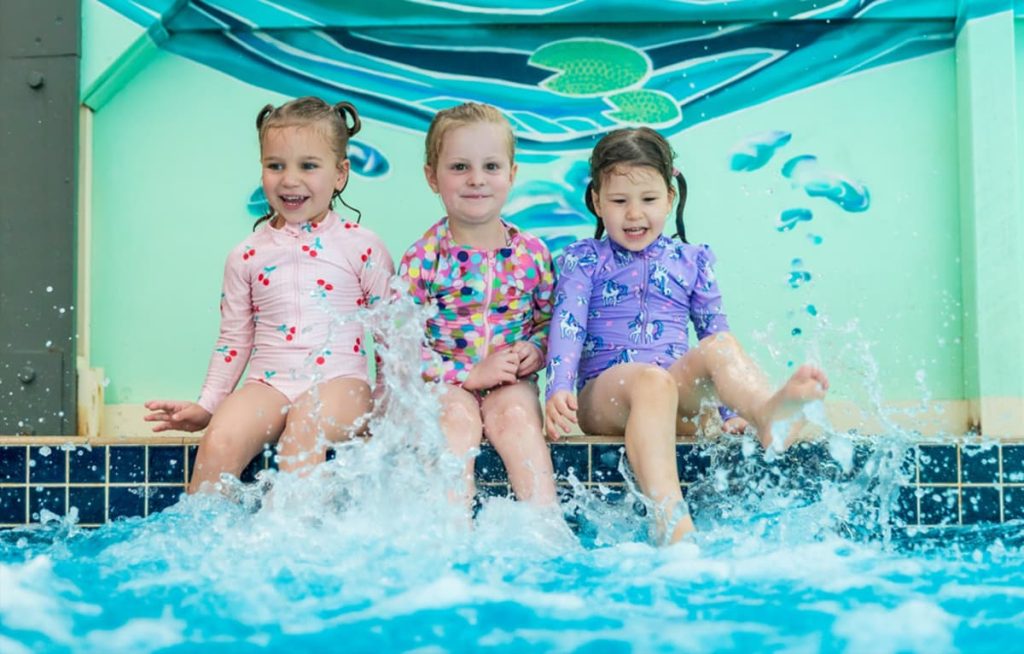
There is no perfect number for every swim school, but smaller classes are generally better for children’s learning.
When there are fewer children in a class, the teacher can spend more time with each child. That usually means more turns, more feedback and more chances to practise properly.
In larger classes, children may spend more time waiting. Teachers may also have less time to notice small things that can affect progress, like body position, breath control or confidence.
It is also worth thinking about how many children are in the pool overall. A class might seem small on paper, but if there are lots of classes running at once, the pool can still feel busy and noisy.
At Shapland, our classes have only three children, with a maximum of two classes running in the pool at once. This is one of the ways we keep lessons calm, personal and focused.
For young children or nervous swimmers, this can be especially valuable. Less noise, fewer distractions and more teacher attention can help children build confidence more gently.
Are Longer Swimming Lessons Better?
Not always.
A longer lesson can sound like better value, but it depends on how that time is used. If a child is spending a lot of the lesson waiting for their turn, getting tired or losing focus, the extra minutes may not lead to better progress.
For children, especially young children, quality matters more than length.
A shorter lesson with fewer children, more individual attention and a focused structure can be far more effective than a longer lesson in a larger or busier class.
At Shapland, our 20-minute lessons are designed to make the most of the time children are naturally able to stay engaged. With only three children in the class, the lesson stays active, focused and personal.
Children are not expected to concentrate for longer than they are ready for. Instead, they have a lesson that is built around how they learn best.
How to Choose a Swim School That Is Right for Your Child
Every child is different, so the right swim school will not look exactly the same for every family.
Some children need a gentle environment where confidence can build slowly. Some need more individual correction to improve their technique. Some need a familiar teacher and a predictable routine before they feel ready to progress.
The best swim school is one that supports both skill development and confidence.
Many parents ask what the best school for swim lessons is, but the answer depends on the child’s needs. In most cases, the best swim school is one that combines qualified teachers, small class sizes, structured progression and an environment where children feel safe, supported and motivated to learn.
Location and cost will always be part of the decision. Lessons need to be practical for your family. But it is worth looking beyond convenience alone.
Ask yourself:
Will my child feel safe here?
Will they receive enough individual attention?
Is the pool calm enough for them to focus?
How many children will be in the pool at once?
Are the lessons the right length for my child’s age and attention span?
Is the program structured?
Are the teachers qualified, patient and experienced?
Is the pool comfortable for my child?
Does the environment feel warm and supportive?
Will this swim school help my child build skills that last?
When you look at it this way, choosing a swim school becomes less about finding the closest option and more about finding the right fit.
A child who feels comfortable, supported and known is more likely to enjoy their lessons and keep building their skills over time.
Choosing With Confidence
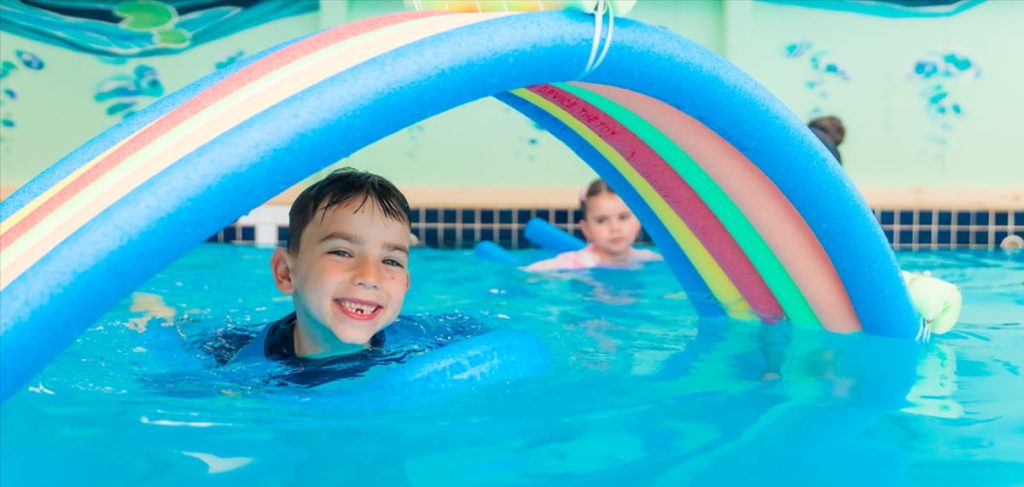
Knowing how to choose a swim school is an important decision.
Swimming is a life skill, and children deserve to learn in an environment that feels safe, supportive and effective. A quality swim school should help your child build confidence, learn vital water safety skills and progress at a pace that suits them.
The best swim school is not always the closest or cheapest. It is the one that gives your child the support, instruction and confidence they need to succeed in the water.
At Shapland Swim Schools, our small classes, experienced teachers and structured program are designed to help children build skills that last well beyond childhood.
With only three children per class, 20-minute lessons designed for children’s focus, a maximum of two classes running in the pool at once, gentle magnesium mineral pool water, purpose-built pool depths and a separate viewing area for parents, Shapland offers a calmer and more personal learning environment than many larger swim schools.
If you are comparing swim schools, use these seven signs as a guide. Look for qualified teachers, small classes, consistent instruction, a clear program, well-designed lesson lengths, strong safety standards and a positive learning environment.
Your child’s experience in the water matters. With the right support, swimming lessons can become one of the most valuable investments you make in their safety, confidence and future.