
When parents are choosing swimming lessons, it is easy to focus on the practical things first. Location, lesson times, price and pool facilities all matter.
But there is another factor that can make a huge difference to how a child feels in the water: class size.
For young children especially, learning to swim is not just about learning strokes or getting through levels. It is about feeling safe, building trust and having enough time to practise properly.
Class size also affects the feel of the lesson. A smaller, quieter class can help children settle, listen and feel more comfortable in the water, especially when they are still building confidence.
That is why smaller classes can make such a noticeable difference.
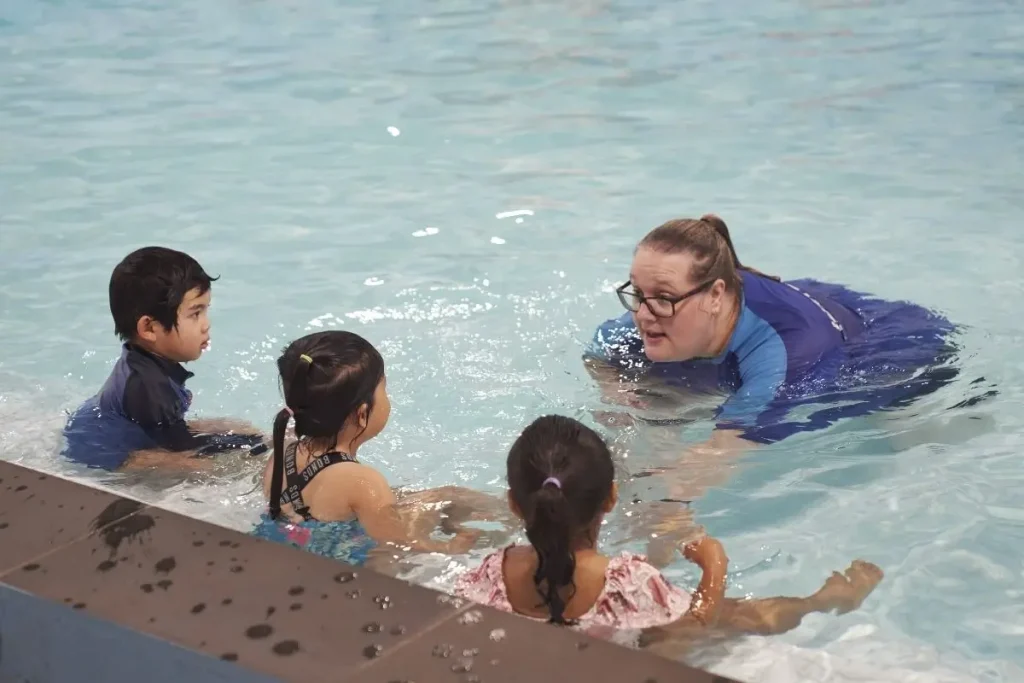
At Shapland Swim Schools, we only ever have three children per class. This is what we mean when we talk about our semi-private swimming lessons. Children still get the lovely social side of learning with others, but the class is small enough for their teacher to give each child genuine attention.
And in the water, that attention really matters.
What does semi-private actually mean?
A semi-private swimming lesson sits between a private lesson and a larger group class.
In a private lesson, a child has the teacher completely to themselves. In a larger group lesson, there may be several children sharing the teacher’s time and attention.
Semi-private lessons offer a balance between the two. Children can still learn alongside others, take turns, watch their classmates and build confidence in a small group setting while still receiving plenty of support from their teacher.
At Shapland, our semi-private classes are kept to only three children. This is not an occasional option or something that depends on the day. It is how we structure our lessons across our swim schools.
A calmer pool can make a big difference
For some children, swimming lessons can feel like a lot at first. There is water, noise, new instructions, other children and a new teacher to get used to. When the pool is busy or loud, it can be harder for a child to settle in and focus on what they are being asked to do.
A quieter learning environment can make lessons feel much more comfortable. Children can hear their teacher more clearly, feel less overwhelmed and have more space to build confidence at their own pace.
This is one of the reasons small class sizes matter so much. At Shapland, with only three children per class, lessons feel calmer and more personal. There is less waiting, less distraction and more opportunity for each child to feel seen and supported.
For nervous swimmers, that calmer environment can be especially important. When a child feels safe and relaxed, they are often more willing to try new skills, practise properly and trust their teacher.
And for confident swimmers, a quieter class still helps. They can focus more easily, spend more time actually swimming and keep progressing without the lesson feeling rushed or crowded.
Children get more time with their teacher
In swimming lessons, small moments matter.
A teacher might notice how a child is holding their breath, whether they are rushing a kick, if they are feeling unsure before putting their face in, or if they need a little more encouragement before trying something new.
In a smaller class, those moments are easier to see.
With only three children in the class, the teacher has more opportunity to check in with each swimmer, give individual feedback and adjust the lesson to suit what each child needs that day.
That can be especially helpful for children who are still building trust in the water. The more a teacher gets to know a child, the easier it is to understand how they learn, what makes them nervous and when they are ready for the next step.
Smaller classes mean less waiting around
Children learn by doing. In swimming lessons, that means time in the water, time practising skills and time repeating movements until they start to feel natural.
When there are fewer children in a class, there is usually less waiting between turns. That gives children more chances to practise, more time moving and more time actually swimming.
For young children, this is important. Long periods of waiting can make it harder to stay focused, especially in a pool environment where there is already a lot going on.
A smaller class helps keep the lesson moving while still giving children the time and support they need.
Children can progress at their own pace
Every child learns differently.
Some children take to the water quickly. Others need more time to feel comfortable. Some are confident with kicking but unsure about putting their face in. Some love floating, while others need extra reassurance before trying it.
In a larger group, it can be harder to give each child the time they need without the lesson feeling rushed. In a smaller class, there is more room for children to progress at a pace that suits them.
This can take a lot of pressure off the child.
Swimming lessons should not feel like a race. Building water confidence and learning safe swimming skills takes time, patience and repetition. A smaller class helps give children the space to learn properly, instead of feeling like they need to keep up with everyone else.
A stronger bond with the teacher
For many children, trust is one of the biggest parts of learning to swim.
Before a child feels ready to float, submerge, kick away from the wall or try something new, they often need to feel safe with the person teaching them.
Smaller classes can help build that trust. When a teacher has fewer children to support, they can spend more time encouraging each child, learning their personality and celebrating their progress.
That relationship can make a big difference, especially for children who are nervous or cautious in the water.
When a child feels understood by their teacher, they are often more willing to try.
Why this matters for water confidence
Swimming is an important life skill, particularly here in Australia, where children are often around pools, beaches, dams, rivers and other bodies of water.
Healthdirect Australia recommends children learn to swim and reminds parents that active adult supervision is always essential around water. You can read more about water safety for babies and children on the Healthdirect website. The Queensland Government also highlights the importance of water safety education for children through its Water Safety Education Program.
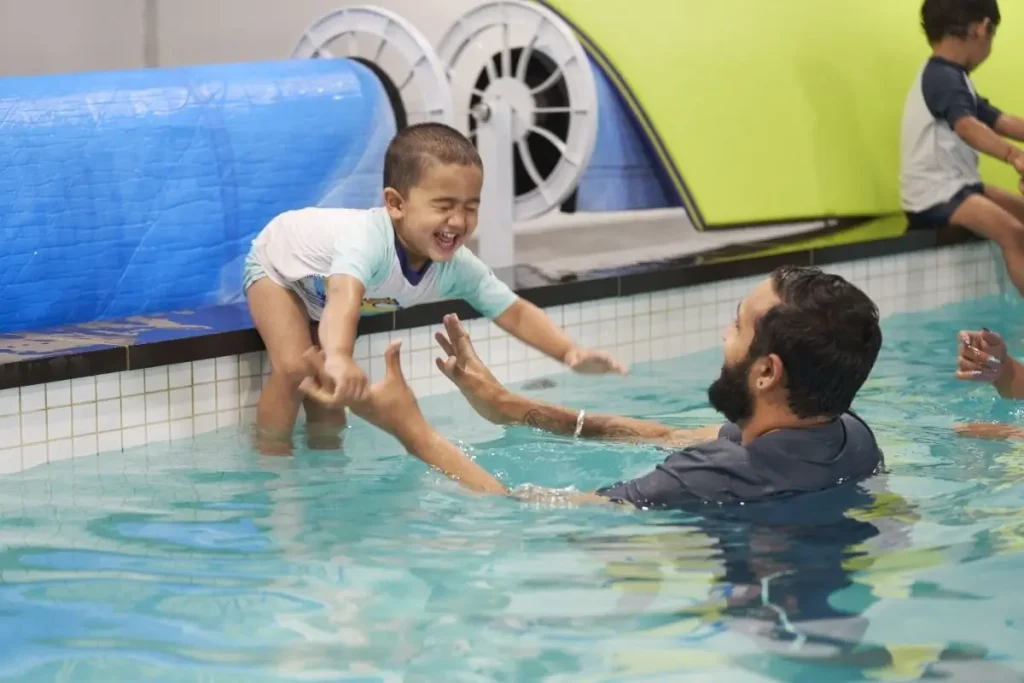
While swimming lessons do not replace supervision, they do help children build confidence, practise important skills and become more familiar with being in and around water.
The right learning environment can help with that.
When children feel calm, supported and confident enough to try, they are more likely to enjoy their lessons and keep building on their skills over time.
Why Shapland keeps classes small
At Shapland Swim Schools, our lessons are designed to feel calm, personal and encouraging.
Our class sizes are kept small, with only three children per class, because we believe children learn best when they feel supported. This gives each child more attention from their teacher, more time to practise and more space to build confidence at their own pace.
Our pools are also designed with young learners in mind, with warm water, gentle magnesium mineral pools and a quieter environment to help children feel more comfortable during lessons.
It is all part of creating a place where children can learn to swim without feeling rushed, overwhelmed or lost in the crowd.
The small class difference
Class size might not always be the first thing parents think about when choosing swimming lessons, but it can have a big impact on how a child learns and feels in the water.
A smaller class can mean:
- more individual attention
- a calmer learning environment
- less waiting around
- more time practising
- stronger trust with the teacher
- more room for each child to progress at their own pace
For many children, those things make swimming lessons feel less overwhelming and much more enjoyable.
And when children enjoy their lessons, feel safe with their teacher and have the chance to practise properly, they are in a much better position to build confidence in the water.
Experience the Shapland difference. Find your nearest swim school and see how our small classes can help your child feel calm, supported and confident in the water.